
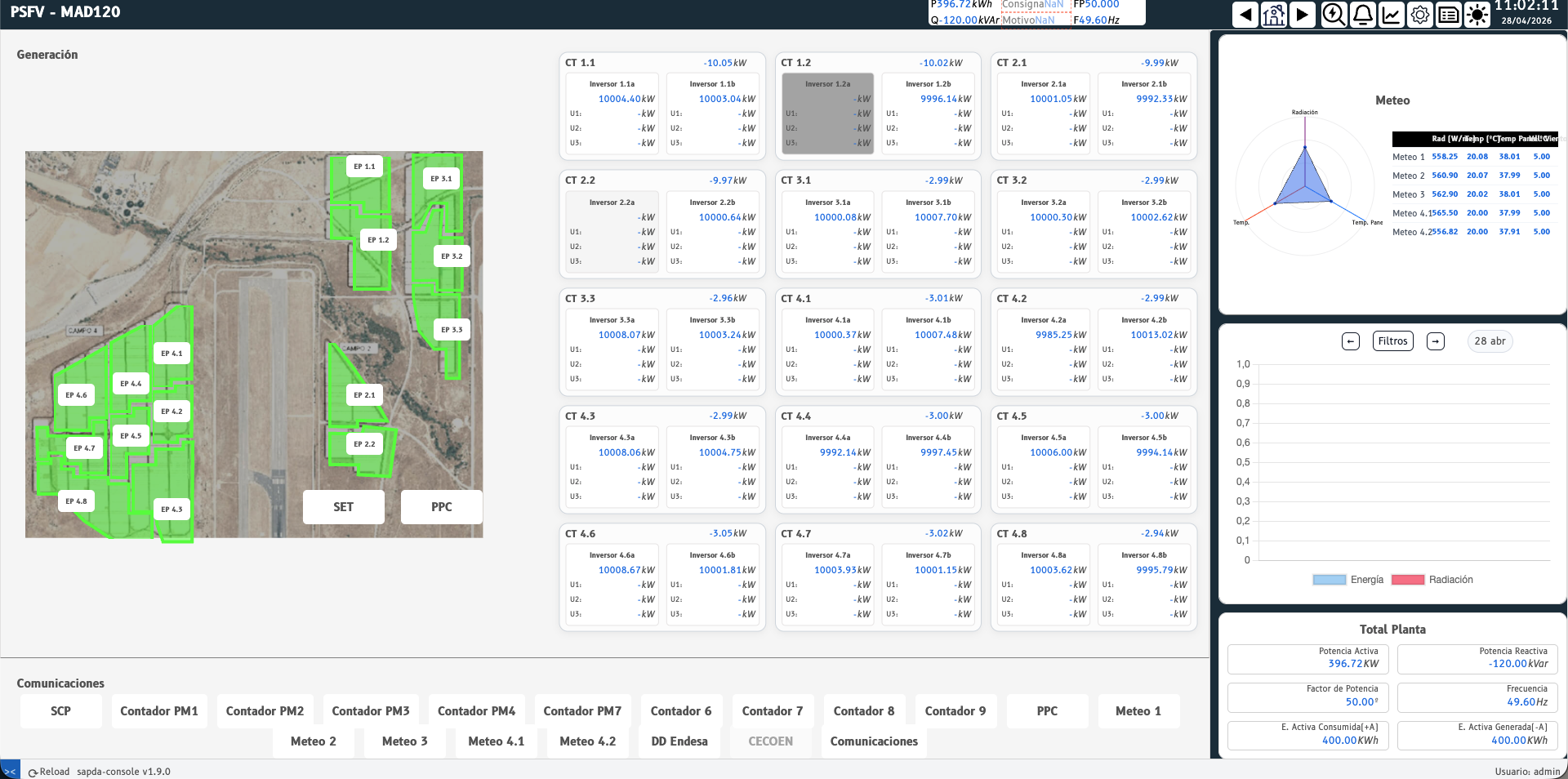
What is a SCADA System and Why is it Key in Modern Infrastructures?
In an increasingly digitalized world, the efficient management of critical infrastructures such as power grids, water systems, transportation, or industrial facilities depends on technologies capable of monitoring and controlling processes in real time. One of the most important is the SCADA system.
In this article, we explain what a SCADA system is, how it works, and why it has become a key piece in modern infrastructures.
What is a SCADA system?
SCADA is the acronym for Supervisory Control And Data Acquisition.
It is a system that allows:
- Monitoring industrial processes in real time
- Collecting data from sensors and devices
- Controlling equipment remotely
- Detecting incidents and generating alerts
In essence, a SCADA system acts as the "brain" that supervises and coordinates the operation of an infrastructure.
How does a SCADA system work?
A SCADA system consists of several key elements:
1. Sensors and field devices
They collect physical data such as temperature, pressure, flow, or equipment status.
2. PLCs and RTUs
Programmable Logic Controllers (PLC) and Remote Terminal Units (RTU) process information and execute commands.
3. Communication system
Enables data transmission between field devices and the central system.
4. SCADA software
Interface that allows visualizing, analyzing, and controlling the system in real time.
Where are SCADA systems used?
SCADA systems are present in multiple critical sectors:
- Energy (power plants, distribution networks)
- Water (treatment plants, supply networks)
- Transportation (tunnels, railways, urban traffic)
- Industry (automated production processes)
- Smart buildings (BMS)
Why are they key in modern infrastructures?
🔹 1. Real-time monitoring
They allow knowing the status of a facility at all times, which facilitates quick and efficient decision-making.
🔹 2. Improvement of operational efficiency
They automate processes and reduce manual intervention, optimizing resources and reducing costs.
🔹 3. Greater safety
They detect failures, anomalies, or risk situations before they become serious problems.
🔹 4. Remote control
They allow managing distributed infrastructures from a single point, even over long distances.
🔹 5. Data analysis
They facilitate the storage and analysis of historical information to improve processes and anticipate incidents.
Current challenges of SCADA systems
Despite their advantages, SCADA systems also face significant challenges:
- Cybersecurity: being connected, they can be vulnerable to attacks
- Integration: compatibility with old or heterogeneous systems
- Scalability: adaptation to growing infrastructures
- Digitalization: incorporation of new technologies like IoT or AI
Trends in SCADA evolution
SCADA systems are evolving towards more advanced models:
- Integration with IoT (Internet of Things)
- Use of artificial intelligence for predictive analysis
- Cloud-based systems
- More intuitive and visual interfaces
- Edge computing for local processing
Conclusion
SCADA systems are a fundamental piece in the management of modern infrastructures. Their ability to monitor, control, and optimize processes in real time makes them an indispensable tool to ensure efficiency, safety, and sustainability.
In an increasingly connected environment, betting on advanced SCADA solutions is not just a technological improvement, but a strategic necessity for any organization managing critical infrastructures.
Do you need to implement a SCADA system?
Having a SCADA system tailored to your needs can make a difference in the efficiency and safety of your infrastructure. Betting on customized and scalable solutions is key to facing current and future challenges.